Showing posts with label 7 Secrets. Show all posts

Saturday, October 29, 2016

7 Secrets From Hindu Calendar Art: Brahma's Secret (Chapter 7, Part F) Reading Notes: EXTRA READING

7 Secrets From Hindu Calendar Art
by Devdutt Pattanaik
Chapter 7 -- Brahma's Secret 
(Video Part 1 of 2)
Via Video Book on YouTube

~
I'm finally finishing Devdutt Pattanaik's book, 7 Secrets From Hindu Calendar Art!!! After 6 long weeks! It has been so, so, so informative! This new "book medium," YouTube Video! (called "Video Book" format) is free and accessible on YouTube. The chapters have been broken down into chunks, and while quite dense, this chapter has two shorter videos instead.

I cannot stress how informative, useful, and helpful this book (Via Video Book!) has been for me. Each video is chocked full of information, but as I am nearing the end, everything is tying back to the earlier chapters quite well. I can definitely say that the first 1 to 2 chapters were a little overwhelming with information, and they took time to digest. However, now that I am finished!!!, I can actually sense that I have an understanding, a solid base, for Hinduism and what I am seeing when calendar art images are portrayed in the video before me. I truly, truly cannot recommend this book (video series by Epified) enough! 
~
Brahma's Secret (Part 1):
  • Human Life is an opportunity
  • Why is the Creator not given the same status as the Preserver, or the Destroyer?
  • "When the word 'creator' is uttered, we take the Bible as the reference point and assume that since God is the creator there, it must be so in the Hindu world as well. But in the Hindu world, creation happens for a reason, and Brahma forgets that reason, which is why he is declared unworthy of worship."
  • "Brahma created the world to understand who he was. The world was a woman, his creation, hence his daughter." 
  • Brahma is unworthy of worship, and Shiva is everything that Brahma is not. 
  • "The purpose of life is to realize the ego and overpower it — either destroy it as Shiva does or be detached from it as Vishnu is."
Hinduism + Astrology + Geomancy
  • "Karma is manifested through nine celestial bodies, the Nava-Grahas, who rule time." [DP then discusses the Vedic art of Jyotish-shastra, the science of light, or astrology.]

    "Using gems and certain chants and rituals, one can increase or decrease the influence of a particular Graha in our life. Thus we can influence the future. It is not just fate; there is free will."
Vastu Parusha pinned down
by Oracle 125

  • "Vastu Purusha was a demon who tried to rise from the earth and block the sky. The various gods pinned him down. Each god is ruler of the point where he still holds down the demon. [North is Kubera, South is Yama, East is Indra, West is Varuna, North-East is Soma, South-West is Surya, North-West is Vayu, South-East is Agni.]

7 Secrets From Hindu Calendar Art
by Devdutt Pattanaik
Chapter 7 -- Brahma's Secret 
(Video Part 2 of 2)
Via Video Book on YouTube

Brahma's Secret (Part 2): Human Life Is An Opportunity
  • Nagas vs Yakshas (metals and gems), Yakshas reside in the north near himalayas
  • Santoshi-maa-vrat: specifically a type of worship performed by women for maternity, end of calamity 
  • "Seeking a boon and a blessing from a god, a God, a goddess, or a Goddess is considered a good thing, and the best way to overturn the vagaries of fate."
  • Tragedies are signposts pointing us to find the purpose of life: of truly finding ourselves, the purpose which existed before Brahma sprouted many heads, the purpose of truly finding oneself, which Brahma forgot
  • Hanuman: "Hanuman is called Sankat-mocham, the remover of problems. He is worshipped by people in the hope that he will destroy the problems in their lives the way he solved all of Ram's problems."
"If a monkey can become God, so can man. Thus, there is still hope for Brahma, the unworshipped God."

Thursday, October 6, 2016

7 Secrets From Hindu Calendar Art: Vishnu's Secret (Chapter 6, Part E) Reading Notes: EXTRA READING


7 Secrets From Hindu Calendar Art
by Devdutt Pattanaik
Chapter 6 -- Vishnu's Secret 
(Video Part 1 of 2)
Via Video Book on YouTube

I'm so close to finishing Devdutt Pattanaik's book, 7 Secrets From Hindu Calendar Art, and it is so, so, so informative! I am digesting it through a new "book medium" for me: YouTube Video! It's called "Video Book" format, and it's free and accessible on YouTube. The chapters have been broken down into chunks, and while quite dense, they're only about 20 minutes in total length (each).

I cannot stress how informative, useful, and helpful this book (Via Video Book!) has been for me. Each video is chocked full of information, but as I am nearing the end, everything is tying back to the earlier chapters quite well. I can definitely say that the first 1 to 2 chapters were a little overwhelming with information, and they took time to digest. However, now that I am nearly finished, I can actually sense that I have an understanding, a solid base, for Hinduism and what I am seeing when calendar art images are portrayed in the video before me. I truly, truly cannot recommend this book (video series by Epified) enough! 

Vishnu's Secret
(He has a lot of secrets)

Part 1
Detached Engagement Brings Order
  • Don't kill a cow! Eating beef is taboo! (Duh!)
  • Cows satisfy man's needs: food, clothing, shelter. Go Daan is the cow charity, which is the greatest charity of all, because receiving a cow means that you are satisfied in all your worldly needs
  • In heaven, the gods have a MAGICAL COW who can fulfill any wish, and from whom all cows descend: Kamdhenu
Kamdhenu/Surabhi milking her calf
Kamdhenu, the mother of all cows,
also known to represent the Mother Earth (komata)

Cows, through their milk that they provide humans, bring us to ecological questioning: how much milk should be reserved for the calf? How much is produced for the humans? Translate that to the earth, and ask the same questions of yourself. Humans alone have destroyed/altered ecosystems. 
Earth cow, representing a full, wealthy, Earthly life
Let me just pause and say that there are so, so, so many images from this video that I wish to keep and use. However, I'll refrain from posting them all here, but this video was really the culmination of all the previous information into that "AHA!" Moment for me when I really, really understood all the stories as being linked as one, instead of separate, individual stories. 

  • Earth takes the form of a cow and runs away when humans mistreat her
  • Vishnu is Gopala: Vishnu brings her back on the condition that humans treat her with respect and kindness
    • Vishnu principal: harmony between Nature and Man
"We want to be lions and dominate society (and those around us),
but society forces us to become cows --
to create value by producing milk, 
and giving that milk not just to our own calf,
 but to others as well."

    • Therefore we are then fit to pull the cart burdened with demands and duties
Vishnu VS Shiva

Shiva:
  • Mendicant
  • 3 horizontal lines of Ash = inertia
  • Animal hide, necklace of seeds
Vishnu:
  • Society
  • ||| 3 Vertical lines of sandal paste = activity
  • Predictable changes of times
  • Necklaces of flowers, gems, gold
  • 4 Tools:
    • conch: announces presence. Represents the rhythm (breath) of the world
    • Discus: cycle of things, what goes around comes around
    • Mace: justice
    • Lotus
  • Altogether, they represent and maintain Dharma, creating a stable society ---> stable and organized society generates wealth
    • Lakshmi is the organization of society and wealth (for Vishnu)
    • Alakshmi: strife. The older, Owl Sister of Lakshmi, and she is recognized every time that Lakshmi is worshipped, so that you never forget that with $$$ comes quarrels and strife, and we can therefore be prepared for it
  • Vishnu, Lord of Maya (Measurement/Judgement)
    • Vishnu's scales: love and affection for one another. This seems somewhat contradictory to the last video, where it discusses that there must be a limit to love and generosity, otherwise everything degenerates into chaos. Perhaps I am not thinking deeply enough about this, though.
    • All rules are flexible: 
"Culture and civilization are like a game, leela --
 fun if everyone upholds the rules and enjoys the participation" 
(my husband would definitely appreciate this perspective)
Avatars of Vishnu:
Matsya:
  • Manu: 1st Man (I explored this in a Wikipedia Trails post, which you can find here. So I was a bit more familiar with this already, thankfully)
    • Manu saves a small fish from a big fish, takes him out of the sea and places him in a pot (Pot = arms of society). Eventually the fish grows too big, and goes back to the sea. Manu was too compassionate and should have stopped helping the fish along the way. Now the sea rises and floods Manu's earth home. 
"Civilizations starts where compassion begins,
Civilizations collapses when there's too much kindness,
when one doesn't know where to draw the line."
2nd Avatar: Turtle
3rd Avatar: Mohini - woman
Asuras: below the Earth, regenerating of wealth
VS
Devas: above the Earth
They are the force and counter force of Earth, churning it
4th Avatar: Varaha: Boar -- Vishnu brings Earth back out from under the sea
  • Amrita: nectar of immortality (obtained from the ocean of milk) -- causes Devas to become immortal
5th Avatar: Brahmin Boy -- shoves Asuras under the Earth, different spheres of influence for Asuras vs Devas
Avatar: Parshurama -- becomes warrior to strike down kings who wield too much authority

Vishnu As:
Ram
Bala Ram (likened to Buddha)
Krishna
Kalki (will destroy society that has become corrupt, will start society again, as the fish -- note he is riding a white horse, like the second coming over the son is predicted to do in the book of Revelations in Christianity... this is an interesting little tidbit)
7 Secrets From Hindu Calendar Art
by Devdutt Pattanaik
Chapter 6 -- Vishnu's Secret 
(Video Part 2 of 2)
Via Video Book on YouTube

Vishnu descends from time to time, upholding Dharma, overturning the jungle

Final Image: Vishnu-Krishna holding weapons
The weapons are his tools to create 
order/predictability, 
institute, maintain and re-define Dharma,
in every age:
peace, stability, prosperity to all

Part 2

Of all the avatars of Vishnu, Ram is worshipped the most, worshipped as king
Ramayana: Laws & appropriate conduct
VS
Bhagavat Purana: introduces us to compassion, love, devotion

Krishna: affection of the heart, bond not created by blood alone, but by love (he was adopted)
+ Beloved Radha (milkmaid/wife)
  • Geeta Govinda: Sanskrit work written by poet Jayadeva (12Century)
Vedanta: 
"Revealed that all humans can discover the divine within them
Joy comes when perfect, absolute realization,
 free of all prejudices is attained."
This oneness with God = Advaita
Advaita: Oneness -- Krishna ultimately disappears, they only hear his flute ---> dissolution of god w/ form
Dvaita: Dualism -- God and Man are separate, Joy comes by surrendering to the Almighty
      ---> all devotees want to reach divine heaven and serve the divine couple (Krishna and Radha)

Siddhas: 
  • Naths or Masters, experts in occult arts, could perform miraculous feats. Rarely members of society, sages and sorcerers both 
  • NavNaths: 9 Siddhas
    • AdiNath: primal master, considered both Shiva and Vishnu
Shiva:
-Tantrik, Shakti, Power
-Rejects code of Dharma, not mainstream, it is for those who have rejects the social code
-Intense sensory engagement: bright colors, narcotics, meat, sex
Yoga is the Balance of Shiva and Vishnu, Tantrik and Vedic
Vishnu:
-Vedic, material reality
-More mainstream, in line with social code
-Meditation, silence, quiet contemplation


Bhagavad Geeta: If there's anything you want to know about the Bhagavad Geeta, Pattanaik pretty much covers it here. 
  • Point: Control ones senses and one's mind, do one's duty with detachment, to focus on action not result and to have faith in the soul
Vishnu descends from time to time, upholding Dharma, overturning the jungle

Final Image: Vishnu-Krishna holding weapons
  • The weapons are his tools to create order/predictability, institute, maintain and re-define Dharma in every age: peace, stability, prosperity to all

7 Secrets From Hindu Calendar Art -- Devi's Secret (Part 5, Part D) Reading Notes: EXTRA READING

7 Secrets From Hindu Calendar Art
by Devdutt Pattanaik
Chapter 4 -- Devi's Secret 
Part 5
Via Video Book on YouTube

I'm continuing working my way through Devdutt Pattanaik's book, 7 Secrets From Hindu Calendar Art, and it is so informative! I am digesting it through a new "book medium" for me: YouTube Video! It's called "Video Book" format, and it's free and accessible on YouTube. The chapters have been broken down into chunks, and while quite dense, they're only about 20 minutes in total length (each). I am thoroughly enjoying this method of learning, and I cannot recommend it enough!

If you are following the Reading Guide for Indian Epics, then note that Part D consists of Devi's Secret and Part 2 of Shiva's Secret. I wanted to keep Shiva's Secret together, in one blog post, which can be found here

Tripura Sundari, one aspect of the Mahadevi,
shown here, forcing life into being
Devi's Secret
Desire and Destiny Create Life

Kanyakumari - S. India, Virgin Bride, Wanted to Marry Shiva
  • Raw power that the goddess has: 
      • IF married, it is used for the married and the home
      • IF unmarried, it is channeled for protection
  • Goddess is a symbol of the material world: feed us and defend us
  • Goddess of household and villages are mothers and warriors
This channel of energy of the goddess into the household or into protection makes me think of the video featuring Uma Thurman as "The Mundane Goddess". If you have 10 minutes, it's a must-see!

Kanyakumari = foreceful domestication of the Earth

  • Why? Because we can. Because we desire a better life. 
  • Nature/Human Relationship is based on desire -- exploitation of that desire. 
  • Man begs Nature (goddess) to domesticate her. This is an interesting concept, right here. 
Value of Men's Actions towards Women (and in relation to the goddess)
  • bad son ---creates---> evil mother
  • good son ---creates---> love and prosperity and fortune
Lakshmi/Bhu: 
  • pot contains the wealth from the confines of civilization
  • pond/river is the wealth abundant to all thru nature
  • beattle leaf beneath the pot = aids digestion and aphrodesiac (EW. Have you ever seen what the beatle leaf does to the mouth? disgusting.)
  • Man desires wealth and pleasure (and so desires woman/goddess)
Bjagavati:
  • From Kerala - wild goddess who kills demons and drinks their blood
  • Form of Parvati -- goddess of the mountains
  • Shiva Linga - husband
  • Ganesha - son
Kama:
  • Love god
  • god of desire, is a disruptive source, no longer worshipped. THIS is also very interesting to note. 
  • Sugar cane bow, flower arrows
Desire
  • Rig Veda: Desire for creation arose in the heart of the Creator (Think: Brahma Dreaming
    • World then came into existence
  • Desire: object, observation, requires something back
  • ax=death,division, noose= bind, binds body to soul, forces us to live another life
Even Death does not separate us from our destiny
Fate: Supervised by Yama (God of Death), rides buffalo, carries noose (the binding agent), Book of Karma

Durga as Kali, her most powerful form
by Raja Ravi Varma

Durga:
  •  Most popular form of Shakti
  • Weapons of War (power) and Bride (love and desires)
  • Invincible One, The One Who Cannot Be Conquered
  • Daughters of Durga:
    • Lakshmi and Saraswati
The Mind is Restless (dominate), The Soul is Restful (witnesses domination, affection)

Ego: Monster or Forgetfullness? <----- Really Interesting Thought here
The one who chases desires can also submit to destiny.

Theme of Transformation is Repeated Over and Over
 in Hindu Mythology, 
Nothing is Absolute.

Same as Christianity? Redemption? Transformation? What about Islam? Judaism?


7 Secrets From Hindu Calendar Art, Chapter 4 -- Shiva's Secret (Part 4) Reading Notes: EXTRA READING (Parts C and D combined)

7 Secrets From Hindu Calendar Art
by Devdutt Pattanaik
Chapter 4 -- Shiva's Secret (Part 1)
Part 4
Via Video Book on YouTube

I'm continuing working my way through Devdutt Pattanaik's book, 7 Secrets From Hindu Calendar Art, and it is so informative! I am digesting it through a new "book medium" for me: YouTube Video! It's called "Video Book" format, and it's free and accessible on YouTube. The chapters have been broken down into chunks, and while quite dense, they're only about 20 minutes in total length (each). I am thoroughly enjoying this method of learning, and I cannot recommend it enough!

I'm combining Shiva's Secret Parts 1 & 2 into this post, even though for the Indian Epics Reading Guides they are split between parts C and D. 

Flower Offering on top of a Shiva Lingam

Shiva's Secret

Part 1
  • Withdrawal leads to Destruction
  • Shiva is a destroyer. However, he is calm, cool, composed, and withdrawn. Has it ever occurred to you that these two things don't usually go hand in hand? How, then, can he be a destroyer?
  • Shiva is the destroyer of desire, death (Yama), 3 Worlds 
  • His 3rd eye destroys desire (Kama), therefore destroys the 3 worlds (Tripura)
3 Worlds
Earth = Private World
Atmosphere = Public World
Sky = All the rest there is
  • Shiva destroys desire for life and the fear of death
  • ||| Ash marks on forehead = symbol of immortal soul, 3 destroyed worlds, state of dissolution
  • Shiva destroys by indifference (eyes shut) = self-containment
  • Shiva Linga: He who destroys is also the creator
    • Brahma (Creator) and Shiva are one and the same, why are they both not worshipped?
    • They are in the form of the Shiva Linga
  • Kali -- most primal form, dances on Shiva, who lies indifferently on the floor, to cause him to care
    • Kali is MOVEMENT
7 Secrets From Hindu Calendar Art

by Devdutt Pattanaik
Chapter 4 -- Shiva's Secret (Part 2)
Part 4
Via Video Book on YouTube

Part 2
Shiva Transforms from Hermit to Householder (by force of Kali!!)

  • Shiva's 1st Marriage to Sati was a disaster
  • The first time that Shiva chooses to respond to the world is after the death of Sati, which his response is no small thing
  • Sati is then reborn as Parvati -- goddess of the mountains
  • Shiva then marries Parvati
  • Shiva ----------> Shankara
    • Standards, which are essential for the householder as cornerstones of society, not so for the hermit or the mendicant
Shiva had to be forced into fatherhood by Parvati, as she sat upon his ever-present erection to impregnate herself. HA! As far as forced into it, I can relate, with my husband having no choice but to become a father, although he was more of a participant in the action.

Shiva's Sons:
Kartikeya - 6 heads, incubated by 6 gods. 6 pointed star -- Yantra, geometrical communications of metaphysical ideas, which therefore becomes 3D in the Shiva Linga - Linga and Womb
Sri Yantra

    • Shiva Linga - water drips continuously, representing movement, the ebb and flow of time, and also the pot above it representing the finite matter of time
    • I really enjoyed learning these concepts/aspects of the Shiva Linga
Wedded to the sky and the earth (S. Indian Traditions)
    • North Indian Traditions: Kartikeya is the god of Bachelorhood, he did not marry, and therefore to this day no woman is allowed to enter his shrines
VS
Ganesha

Monday, September 19, 2016

7 Secrets From Hindu Calendar Art, Chapter 3 - Ardhanari's (Shiva's) Secret (Part C) EXTRA READING

7 Secrets From Hindu Calendar Art
by Devdutt Pattanaik
Chapter 3 -- Ardhanari's Secret
Via Video Book on YouTube


I'm continuing working my way through Devdutt Pattanaik's book, 7 Secrets From Hindu Calendar Art, and it is so informative! I am digesting it through a new "book medium" for me: YouTube Video! It's called "Video Book" format, and it's free and accessible on YouTube. The chapters have been broken down into chunks, and while quite dense, they're only about 20 minutes in total length (each). I am thoroughly enjoying this method of learning!

For the Reading Guide in Indian Epics, Part C consists of Andhanari's Secret and Shiva's Secret (Part 1). For the sake of keeping Shiva's Secret together, in one blog post, I combined Shiva's Secret Parts 1 and 2 together here
Ardhanari's Secret

  • God is stillness within, Goddess is movement around.
  • God: 
    • Nirgun: Without Form
    • Sagun: With Form
  • God is best embodied in 3 Human Couples:
    • Brahma + Saraswati
    • Vishnu + Lakshmi
    • Shiva + Shakti
  • Male Trinity: Doing/Spiritual representation of god
    • Brahma: Creator
    • Vishnu: Sustainer
    • Shiva: Destroyer
  • Female Trinity: Passive, Material representation of god
    • Saraswati: Knowledge (Brahma's consort)
    • Lakshmi: Wealth (Vishnu's consort)
    • Shakti: Power (Shiva's consort)
  • "Women are meterial reality, men are spiritual reality." (But modern times have misconstrued this myth!) 

  • Male: Judged, observed, measures with scales
  • Female: Maha-Maya (Embodiment of Delusion) Measured by Men
Ardharnarishvara
1/2 male 1/2 female,
with both vahanas


Ardharnarishvara: God as 1/2 male, 1/2 female
  • Left Side: Male as the ascetic (Form of Shiva, the Ascetic God)
  • Right Side: Female dancer
Why?
  • Parvati saw Ganga on Shiva's head, she was enraged! So, to satisfy her, Shiva merged his body with hers. (Ha!)
"For Without Either, There is Neither." 

(Referencing that without either male or female, then there is in fact neither. Nothing can be created without the female.)

7 Secrets From Hindu Calendar Art, Chapter 3 - Ardhanari's (Shiva's) Secret (Part C) EXTRA READING

7 Secrets From Hindu Calendar Art
by Devdutt Pattanaik
Chapter 3 -- Ardhanari's Secret
Via Video Book on YouTube


I'm continuing working my way through Devdutt Pattanaik's book, 7 Secrets From Hindu Calendar Art, and it is so informative! I am digesting it through a new "book medium" for me: YouTube Video! It's called "Video Book" format, and it's free and accessible on YouTube. The chapters have been broken down into chunks, and while quite dense, they're only about 20 minutes in total length (each). I am thoroughly enjoying this method of learning!


Ardhanari's Secret

  • God is stillness within, Goddess is movement around.
  • God: 
    • Nirgun: Without Form
    • Sagun: With Form
  • God is best embodied in 3 Human Couples:
    • Brahma + Saraswati
    • Vishnu + Lakshmi
    • Shiva + Shakti
  • Male Trinity: Doing/Spiritual representation of god
    • Brahma: Creator
    • Vishnu: Sustainer
    • Shiva: Destroyer
  • Female Trinity: Passive, Material representation of god
    • Saraswati: Knowledge (Brahma's consort)
    • Lakshmi: Wealth (Vishnu's consort)
    • Shakti: Power (Shiva's consort)
  • "Women are meterial reality, men are spiritual reality." (But modern times have misconstrued this myth!) 

  • Male: Judged, observed, measures with scales
  • Female: Maha-Maya (Embodiment of Delusion) Measured by Men
Ardharnarishvara
1/2 male 1/2 female,
with both vahanas


Ardharnarishvara: God as 1/2 male, 1/2 female
  • Left Side: Male as the ascetic (Form of Shiva, the Ascetic God)
  • Right Side: Female dancer
Why?
  • Parvati saw Ganga on Shiva's head, she was enraged! So, to satisfy her, Shiva merged his body with hers. (Ha!)
"For Without Either, There is Neither." 

(Referencing that without either male or female, then there is in fact neither. Nothing can be created without the female.)

Monday, September 12, 2016

7 Secrets From Hindu Calendar Art, Narayan's Secret: Reading Notes Chapter 2 / Part B EXTRA READING

7 Secrets From Hindu Calendar Art
by Devdutt Pattanaik
Chapter 2 -- Narayan's Secret
Via Video Book on YouTube

Narayan's Secret


  • Narayan is God. His deep slumber marks the dissolution of the world.
  • Rebirth of the world that exists/ ceases to exist cyclically as Narayan wakes/sleeps
    • No urgency in the world for Hindus like there is for Christians/Greeks. 
  • He sleeps above an Ocean of Milk which creativity is drawn out of when it is churned, just like butter is drawn out of milk when it is churned. 
    • Represents possibility (of creativity, of everything), the world is simply waiting to be churned
  • Adi Shesha, Ananta Shesha -- static, Narayan sleeps on time
  • Lakshmi and Narayan are pictured when he is ASLEEP, when he is AWAKE he is called Vishnu
  • Shiva is also pictured, showing the differences in lines on their foreheads: Shiva is 3 horizontal lines, Vishnu is two vertical lines meeting together between the eyebrows.
  • Garuda is Vishnu's mount -- still Shesha and flying Garuda 
  • Vishnu -----> Avatars to Human (Rama)
  • Creation is the result of Awareness, a subjective realization with each creation, something is destroyed (think baby on the choppy ocean waters and rebirth)
"What one considers the end is actually just a phase, a part of the process; after the end, comes the beginning." 
Hiker on a Journey
  • Death is a comma, not a full stop.
  • In Indian Art: 
    • Right Side: Soul, Intellect
    • Left Side: Movement, Matters, Emotions, Where the Heart is Located
Wengenn in Wonderland, by Queenie Liao
from boredpanda
I could create a story about Vishnu/Narayan as he grew and learned to sleep, as a child does... First they sleep a lot, which for Vishnnu, would cause the world to reset (rebirth) again and again and again, quite frequently. Then, when he would hit what would be equivalent to his Terrible Twos, and he refuses to sleep, the World does not get to reset or rebirth... and people begin to live for thousands of years, and Babylon happens, etc But, as Vishnu grows older, he learns to regulate his sleep, and has now attained quite a regular sleep pattern, that similar to that of an adult who has settled in to the pattern of life, and the World now rebirths, or resets, on quite a regular, predictable basis.


7 Secrets From Hindu Calendar Art, Reading Notes Chapter 1 / Part A EXTRA READING

7 Secrets From Hindu Calendar Art
by Devdutt Patanaik
Chapter 1 -- Ganesha's Secret
via Video Book on YouTube

The Divine Family Portrait
Shiva, Parvati, Ganesha and Kartikeya
I have seen this classic Divine Family Portrait loads of times -- but it had never really clicked in my head exactly who they all were. This video broke down exactly the family relations, and dove into a bit about who each God or god is as a person.
~

This week I started reading 7 Secrets From Hindu Calendar, by Devdutt Patanaik via Video Book on YouTube -- a much appreciated format! While the Video Book is narrated slowly enough, it still feels like a deluge of information being thrown at you -- and then stirred around with rhetoric questions which challenge the notion that anything at all in this world can be concrete. 


For example, Shiva's sons Ganesha and Kartikeya are challenged as to who might be the better son and win a prized mango by traveling around the world 3 times the quickest. Kartikeya travels around the whole world, and so represent physical might, while Ganesha went around his parents 3 times, who are, to him, his entire world. He embodies intellect and cunning. In supporting his claim, Ganesha tells Kartikeya, 
   
"Myth is an idea churned in my world; mythology is the set of stories, symbols, and rituals that communicate a myth."

Shiva

Most interesting was learning about Shiva. "When Shiva shuts his eyes, the whole world ceases to be, which is why Shiva is called the destroyer, and is considered God." [there are lesser gods and goddesses, spelling in English with lower-case g]

Shiva did not want to be a husband or a father, but when he opened his eyes (and spirit), he married Parvati. Ganesha represents the union of two opposites, the desire of his mother to have a family (Parvati represents material aspiration), and his father, who does not (Shiva represents spiritual aspirations). Ganesha also represents a mortal body and an immortal head. 

 It is important to note that "Brahma is male, and excludes the female form. It is an incomplete form, and thus implies the existence and need of a female, but where is she?" "She is the formless knowledge that is being transmitted.... She is called Saraswati." 

No man can create anything without Woman, not even God. She is the creator of the Vedas, and Brahma merely communicates it. 

4 Heads of Brahma = 4 Expressions of the Veda = 4 Goals of Life:
  1. Dharma -Righteous Conduct
  2. Artha - Economic Activity 
  3. Kama - Pleasurable Pursuits
  4. Moksha - Spiritual Practices
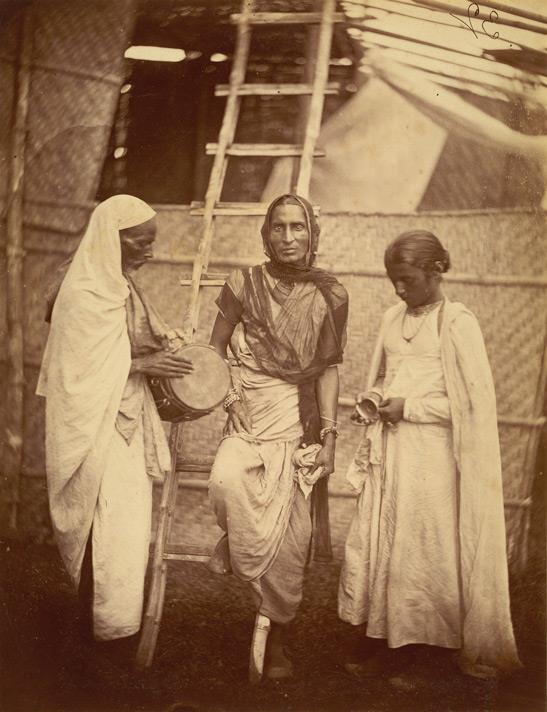
Bahuchara Mata - goddess of the Hijras

Hijra is the third gender, hermaphrodites who live on the fringes of society. Bahuchara once turned a woman into a man, allowing her to be a husband to the woman who was given to her as a bride. 
I saw a lot of Hijras when I was in Mumbai, and they would offer blessings to you after begging change off of you. If you met a Hijra, but did not give them something, then they would curse you. They are considered auspicious, and it is lucky if a group of them (or even one) visits your wedding party. I was unaware who their goddess was, precisely, however, until this video. 
A Hijra in 1860's Eastern Bengal,
via Wikimedia Commons